
An India-Japan joint statement said the two leaders expressed serious concern over the conflict and the unfolding humanitarian crisis in Ukraine.

The 30-share Sensex ended down 538 points at 26,781 and 50-share Nifty ended down 152 points at 8,067.

The EU is likely to intensify sanctions if the situation remains tense.

The country may propose pipeline via China when Putin visits this year.

'This is a good time to restructure your portfolio because the sectors and stocks that performed in the last bull market may not perform as much now.'
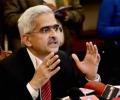
Heightened geopolitical uncertainties will lead the Reserve Bank's rate-setting panel to opt for a status quo at the next week's meeting, Axis Bank's chief economist Saugata Bhattacharya said on Monday. Bhattacharya said he had earlier expected a tightening action at the policy meet scheduled for April 6-8 but the increased uncertainties on the geopolitical front due to the Russian invasion of Ukraine and its impact on commodity prices makes him now think that RBI will defer such an action. He said the central bank's Monetary Policy Committee (MPC) may hike rates in the second half of FY23 by up to 0.50 per cent.
Optimism about a stable govt at the Centre, a demand revival and falling oil prices buoyed the markets.

In 2017, a consortium led by Russian state oil company Rosneft agreed to buy Essar Oil for $12.9 billion in India's biggest foreign acquisition of a homegrown company. Rosneft's buyout of Essar's assets was meant to herald a wave of energy investments in India - over six decades after Esso, Caltex and Shell invested in India's refining sector in the 1950s. But the government has tripped up in its efforts to sell Bharat Petroleum Corporation Ltd (BPCL), formerly Burmah Shell, a blue chip public sector company. Bidders include a couple of global funds and resources firm Vedanta.

'I am not optimistic about the global economy for the next couple of years.'
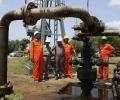
The company has chalked out a detailed plan for development of its existing KG basin assets after integration with GSPC facilities.

The reimposition of sanctions on Iran will have major impact on countries like India, with which it has traditional and historic trade relationship.
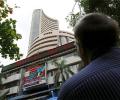
The positive bias was aided by metal, realty and auto indices

The PM has been named second year running; other contenders include Google's Sundar Pichai, US President Barack Obama, Islamic State leader Abu Bakr Baghdadi.
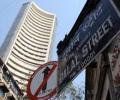
The 30-share Sensex ended down 71 points at 26,710 and the 50-share Nifty lost 38 points to close at 8,030.
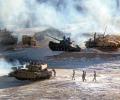
'The Chinese are only about 160-170 km behind.' 'It will not take much time for them to bring their troops back, considering that they have better infrastructure -- and the weather is now favourable.' 'They can move in much faster as the terrain favours them.'

Mayank Ashar, managing director and chief executive officer, Cair India, says the reform momentum should continue and the industry should do its part too.

India-Israel relations are at a crossroads. Simply chanting old hackneyed mantras on terrorism, secularism, democracy, et al, won't suffice. There is danger of stagnation setting in, says Ambassador M K Bhadrakumar.

'Indian diplomacy in West Asia under the present government has been a success story -- and with Saudi Arabia in particular,' says Ambassador M K Bhadrakumar.

The broader markets underperformed benchmark indices as the BSE Mid-cap and Small-cap tumbled over 2%.
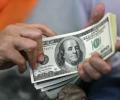
Exports to Europe shrank by near 2 per cent in the 11 months.

Because of India's weak fiscal position, the plethora of debt-burdened infrastructure companies and the poor asset quality of public sector banks, economic growth in 2015-16 may be limited to about six per cent, say Shankar Acharya.

Sensex closed the day 416 points higher.

Shankar Acharya gives ten predictions on key politico-economic developments in the world and ten for India.
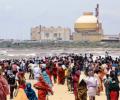
How on earth did Dr Manmohan Singh and his ministers conclude that the casualties of a disaster in a nuclear plant would be fewer than the deaths and injuries caused by the Bhopal gas tragedy? And that the compensation could, therefore, be capped at a smaller amount, asks T V R Shenoy.

2014 was a year for downturn for most economies across the globe.

The Geneva agreement is a signal, which at least Saudi Arabia and Israel are so reading, that normalisation of relations between US and Iran is not merely about the nuclear fuel cycle, says K C Singh.

A theory that is doing the rounds is that with election nearing, this depreciation of the rupee will allow politicians of all hues to bring back their ill-gotten wealth.
